

The experts assessed the risks of money laundering and terrorist financing, four sectors are the most vulnerable
In the most recent National money laundering and terrorist financing risks assessment conducted under the request of the FCIS the most vulnerable business sectors were announced, which are at the largest risk to be involved in money laundering and terrorist financing. On the top of the risk ranking are the sectors of the operators of virtual currency exchange, lawyers, trading in cash and trade in real estate.
The national risks assessment renewed at least every four years identify the risks in different sectors, determines the scope of money laundering and terrorist financing risk. During the risk assessment, the related threat and vulnerability are assessed, which are scored from 1 up to 4 (from the very low up to very high risk). The scope of risk depends on combination of threat and vulnerability.
One of the sectors scored as the most risky are the operators of virtual currency exchange, who become risky because of quick transfers of money to different countries, the guaranteed anonymity of transfers. The operators providing services often apply different means of money laundering control –this is the way to attempt to use the money legalized by criminal means. One of the most often scenarios is whenever using the services of operators the attempt is made to transfer the illegal funds or to buy different goods anonymously. There are instances whenever criminals, using the illegally obtained money, establish virtual exchanges themselves. It is also notable that the attempts are made to withdraw virtual currency in cash or effect payments using payment cards in cryptocurrency.
One of the greatest threats of the sector is the high level of anonymity, which appears, using unreliable technologies of identification detection or not using them at all, and quick transfer of money – this is particularly favourable for criminals. Operators of virtual currency exchange are often established in foreign countries, therefore it is difficult to trace their clients, and the sector becomes vulnerable and attractive for money laundering.
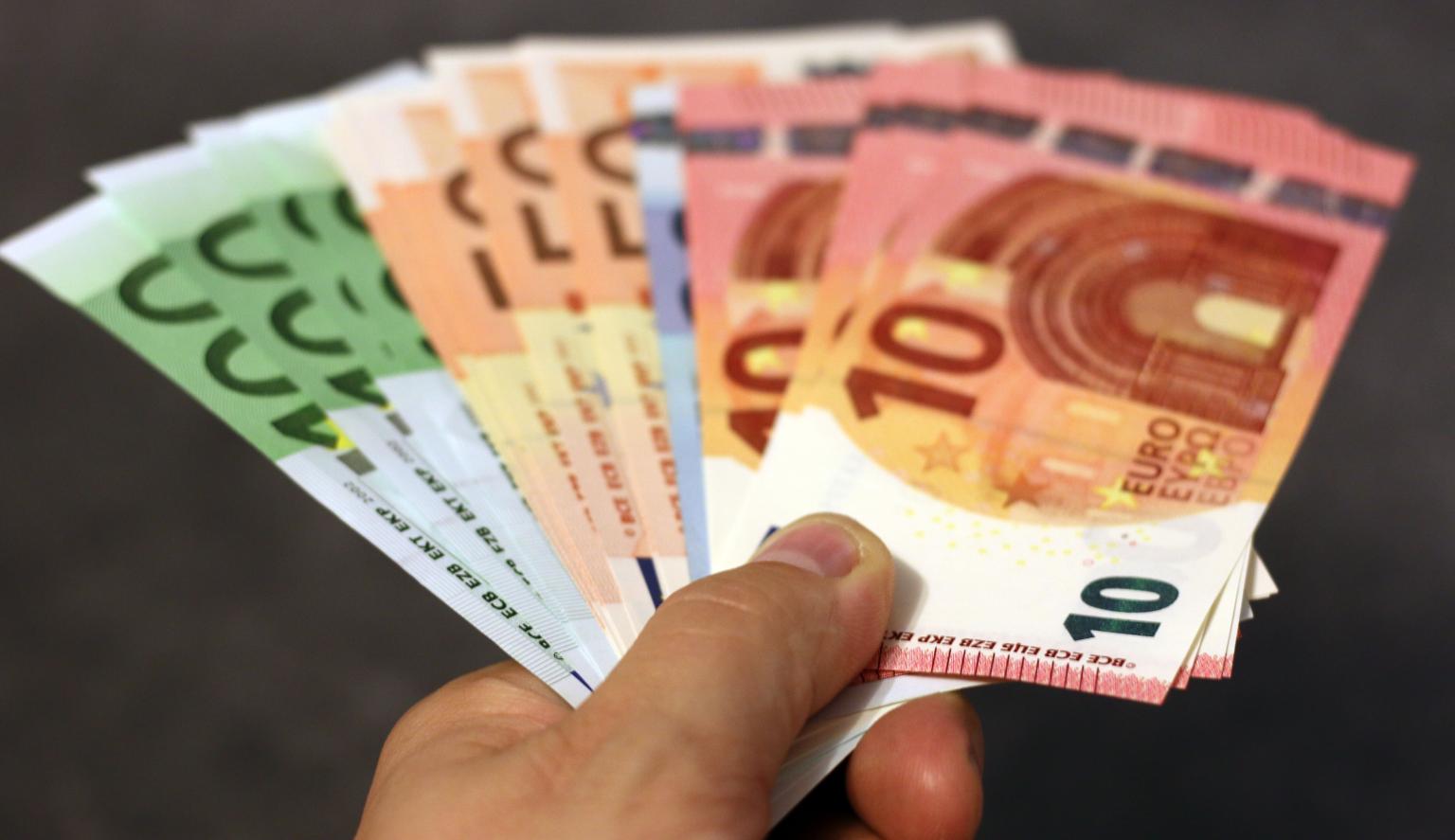
The trading in cash is considered to be one of the easiest ways to conceal the money obtained by criminal means, which does not need any special knowledge, and transactions are conducted especially quickly. The most often scenarios are, whenever the valuable movable property or the vehicles are purchased, the businesses are established, in which cash predominates. Terrorist groups act similarly – their aim is to wash money and sell high-value goods, and to use the received money for financing of their activity.
Still large part of immovable property in Lithuania is purchased paying in cash, obtained by criminal means. Such model of activity remains attractive, because it does not need any comprehensive knowledge about the sector.
The services of the lawyers are also attributed to the business sectors of the highest risk, because the lawyers would be able to apply multi-faceted scenarios of money laundering and terrorist financing. The knowledge of the national and international legislation and of tax environment and the use of the aforementioned knowledge in cooperation with criminals, creating money laundering schemes, establishing companies for that purpose or ownership chains in different countries, concealing the beneficiaries, are of the largest threat.
This year the second national report on risk assessment of money laundering and terrorist financing has been introduced. The risk assessment, which was coordinated by the Financial Crime Investigation Service under the Ministry of the Interior, took place for more than one year. For this purpose, the assistance of independent experts of UAB “Deloitte Lietuva” and foreign experts with great experience in risk assessment was used. The process itself was controlled by the Working Group for coordination of the prevention of money laundering and terrorist financing, which was established by the decree of Prime Minister.
The national money laundering and terrorist financing assessment was conducted, implementing the mandatory requirements of the international working group for financial actions to prevent money laundering and terrorist financing, which is the global maker of the obligatory standards for the prevention of money laundering and terrorist financing. The assessment methodology of the risk of money laundering and terrorist financing, making influence on the European Union internal market, combining qualitative and quantitative information and expert insights have also been referred to.